1
Unicron devours a world
The film opens on the planet-eater Unicron consuming an entire inhabited world, establishing a cosmic horror far beyond anything the cartoon had shown, and the god-scale threat looming over the whole story.
Cold open
In theaters again // from Sep 17, 2026
The 1986 classic returns to cinemas for Transformers Day in 4K and select 4DX, with an exclusive all-new post-credits chapter. Tickets on sale now. Full dates, all eight countries and where 4DX is playing are on our tickets and dates page. Not able to wait? Rent it in HD tonight, or see every way to watch it at home.
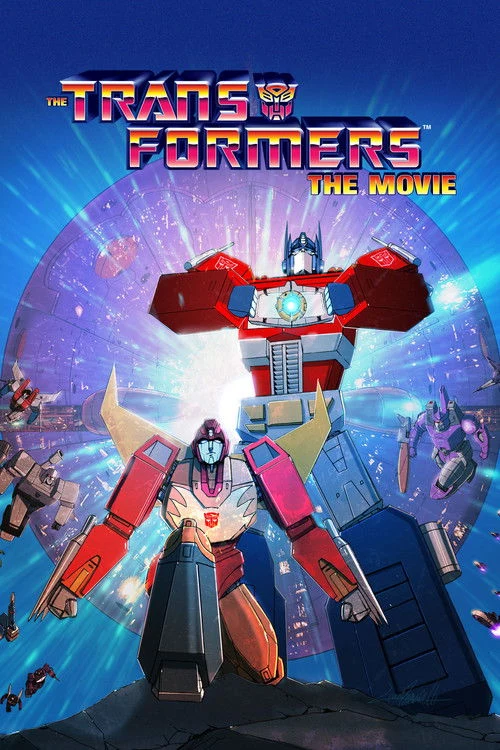 Own the 4K restoration 40th Anniversary 4K steelbook Streets 17 Nov 2026 · Dolby Vision and Atmos Pre-order → Watch now Rent or buy digital $2.99 to rent in HD, $9.99 to own
 Affiliate links. We may earn a commission at no extra cost to you.
// THE 1986 ANIMATED CLASSIC
The battle for the ultimate power in the universe.
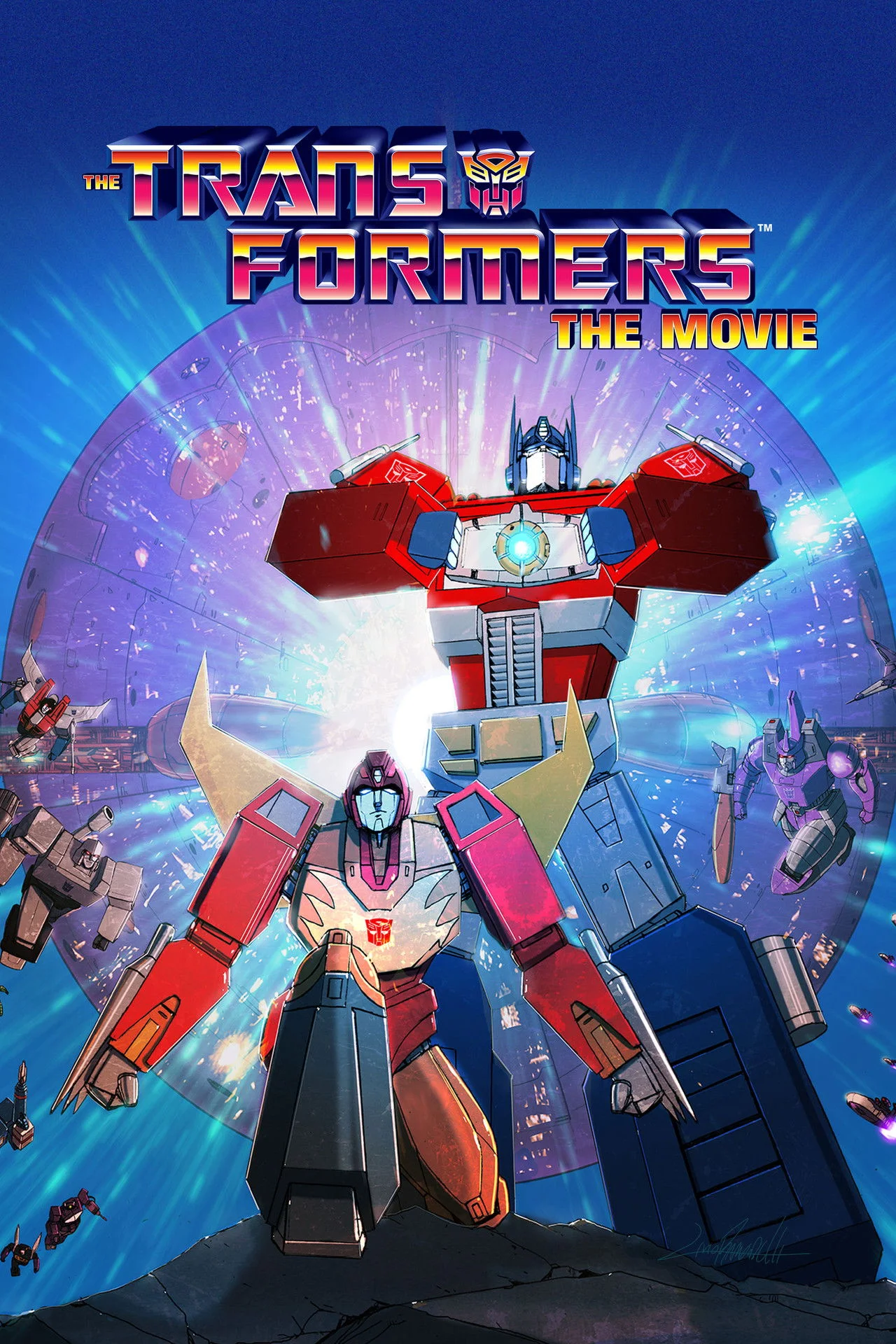
Nelson Shin’s 1986 animated feature killed off a generation’s heroes in its first act, introduced the planet-eating god Unicron, and gave a toy cartoon a body count and a soundtrack nobody saw coming. A box-office flop reborn on video as the most beloved and influential Transformers film ever made. This is the deepest record of it anywhere: every score, every character, every secret, and the road that got it to the screen.
The 40th Anniversary
// THE VERDICT
Panned in 1986 as a feature-length toy commercial, the film has been thoroughly reassessed: a 62 percent Tomatometer and, tellingly, an 88 percent audience score, the highest of any Transformers movie. Time turned a flop into a cult classic and the emotional touchstone of the whole franchise.
A whiplash inducing, excessively violent, metal-scored, hallucinatory narrative nightmare, unquestionably the primary tonal and structural influence on Bay’s films.
Killing off Optimus Prime gave Transformers: The Movie the kind of no-one-is-safe stakes rarely afforded animated films at the time.
Thirty-five years on, the death of Optimus Prime still stings, the rare children’s film brave enough to let its hero fall and mean it.
Orson Welles voicing a giant, villainous robot obsessed with the Matrix while Stan Bush scream-sings The Touch is proof the 80s were the best decade.
The greatest Transformers movie of all time. Transformers actually transform, and they actually die. Hell to the Autobot yes.
A ninety-minute sugar rush of almost nonstop brutal robot action fueled by the power of 80s metal.
At the time it was dismissed as a feature-length toy commercial. It has since been reassessed as a bold, strange, genuinely cinematic swing.
One of the most beloved and influential animated films of the 1980s, its soundtrack and its heartbreak both outliving the theatrical flop that birthed them.
Commercially the film failed. Released on August 8, 1986 by De Laurentiis Entertainment Group across roughly 990 screens, it grossed about 5.8 million dollars in the United States against a budget in the same neighbourhood, the 99th-highest-grossing film of that year. Its disappointment helped sour Hollywood on theatrical cartoons tied to toy lines, and the American series ended in 1987. On home video, everything changed.
// THE STORY
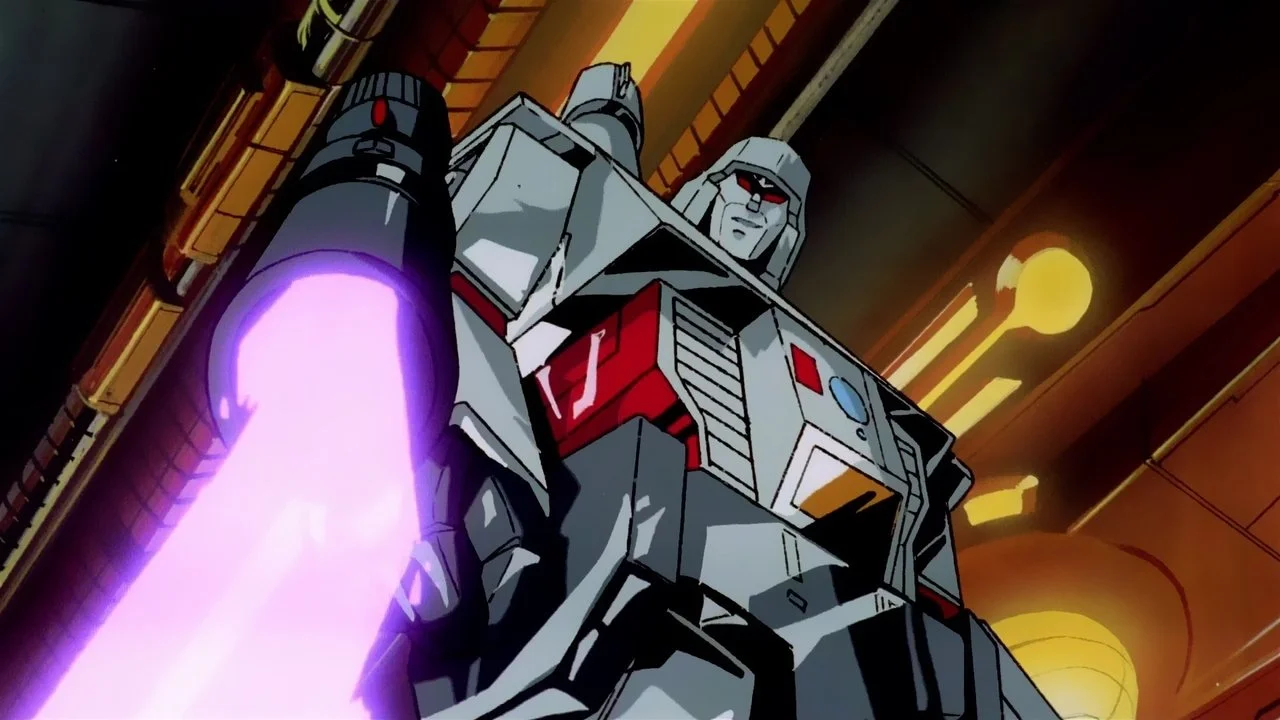
The year is 2005. Two decades on from the cartoon’s present day, the Decepticons have conquered Cybertron and the Autobots stage their war from two of its moons, running supply runs to a battered Earth. The film opens with the unthinkable: Megatron’s forces ambush an Autobot shuttle and butcher its crew, then assault Autobot City in a battle that leaves much of the heroic roster dead on screen.
At the centre is a duel between Optimus Prime and Megatron that kills them both. The dying Prime passes the Matrix of Leadership to the next generation with a promise that an Autobot will one day use it to light their darkest hour. Far out in space, the planet-sized Unicron salvages the broken Megatron and remakes him into Galvatron, then sends him to seize the Matrix, the one thing that can destroy a god. What follows is a chase across alien worlds as the young Autobot Hot Rod grows into the leader who finally opens the Matrix and ends Unicron.
The film killed off a generation of heroes on screen, Optimus Prime above all, giving a toy cartoon the kind of no-one-is-safe stakes almost no animated film of its era dared to carry.
Unicron, the world-sized machine that eats other worlds, arrived here as a genuine cosmic horror, dropped into a children’s cartoon and voiced by Orson Welles in his final role.
Vince DiCola’s synth score and Stan Bush’s The Touch and Dare outlived the film that introduced them, becoming cult artifacts pressed to vinyl and revived for decades.
A children’s cartoon that plays like an opera of death and succession, it killed the franchise’s most iconic hero in the opening act and never flinched.
// INTERACTIVE CHARACTER EXPLORER
Tap any character for the voice actor, the backstory, and our read on how central they are to the film and to Generation One.
// THE FILM, MOMENT BY MOMENT
The beats the film is built on, walked in order. Every one of them plays here as a scene clip. Everything from The Shuttle Massacre on is a spoiler, including the death of Optimus Prime.
The film opens on the planet-eater Unicron consuming an entire inhabited world, establishing a cosmic horror far beyond anything the cartoon had shown, and the god-scale threat looming over the whole story.
Cold open
The year is 2005. Megatron’s forces ambush an Autobot shuttle and butcher its crew on screen, a shocking burst of on-screen death that tells the audience immediately this is not a normal episode.
The war turns
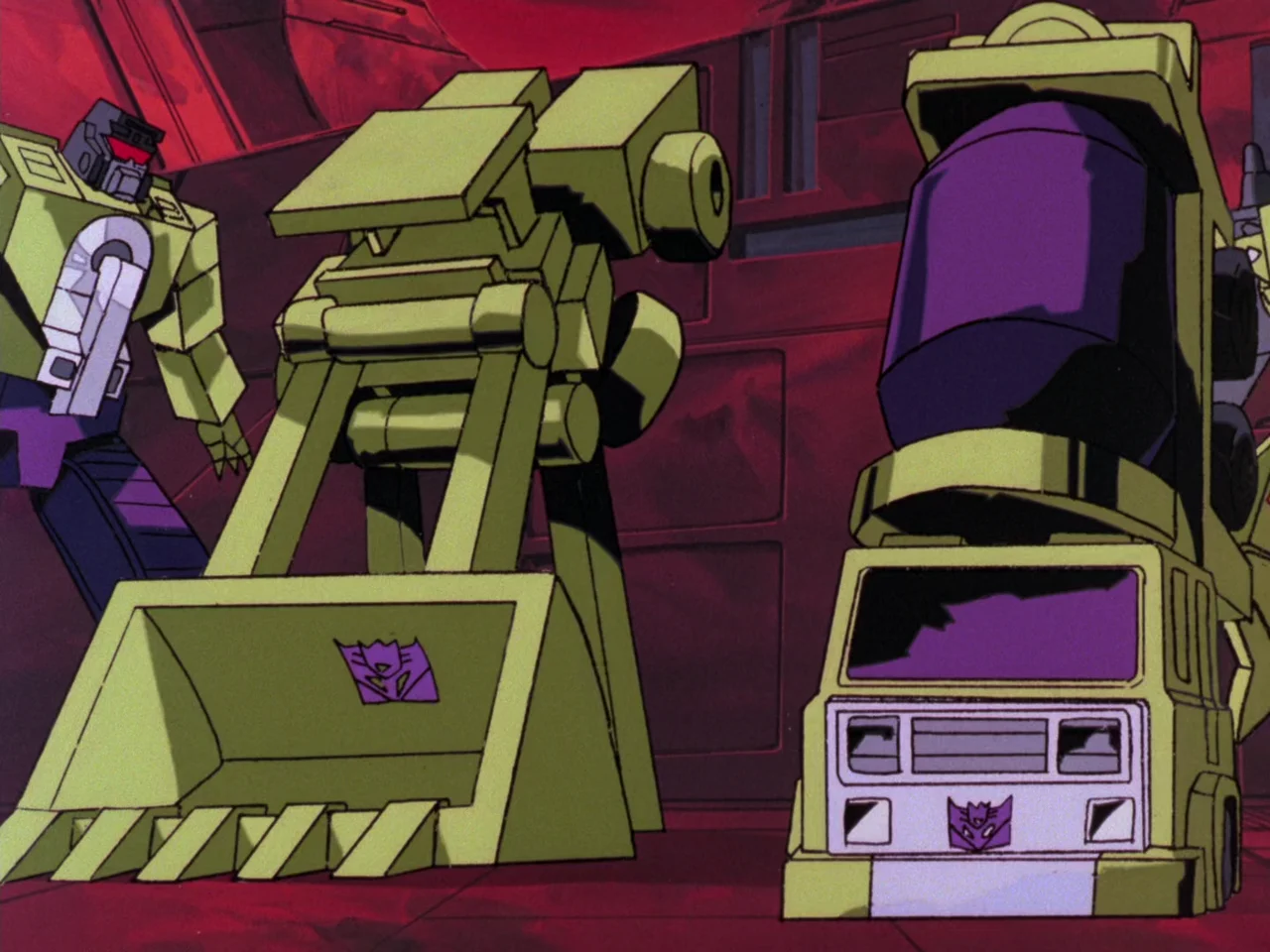
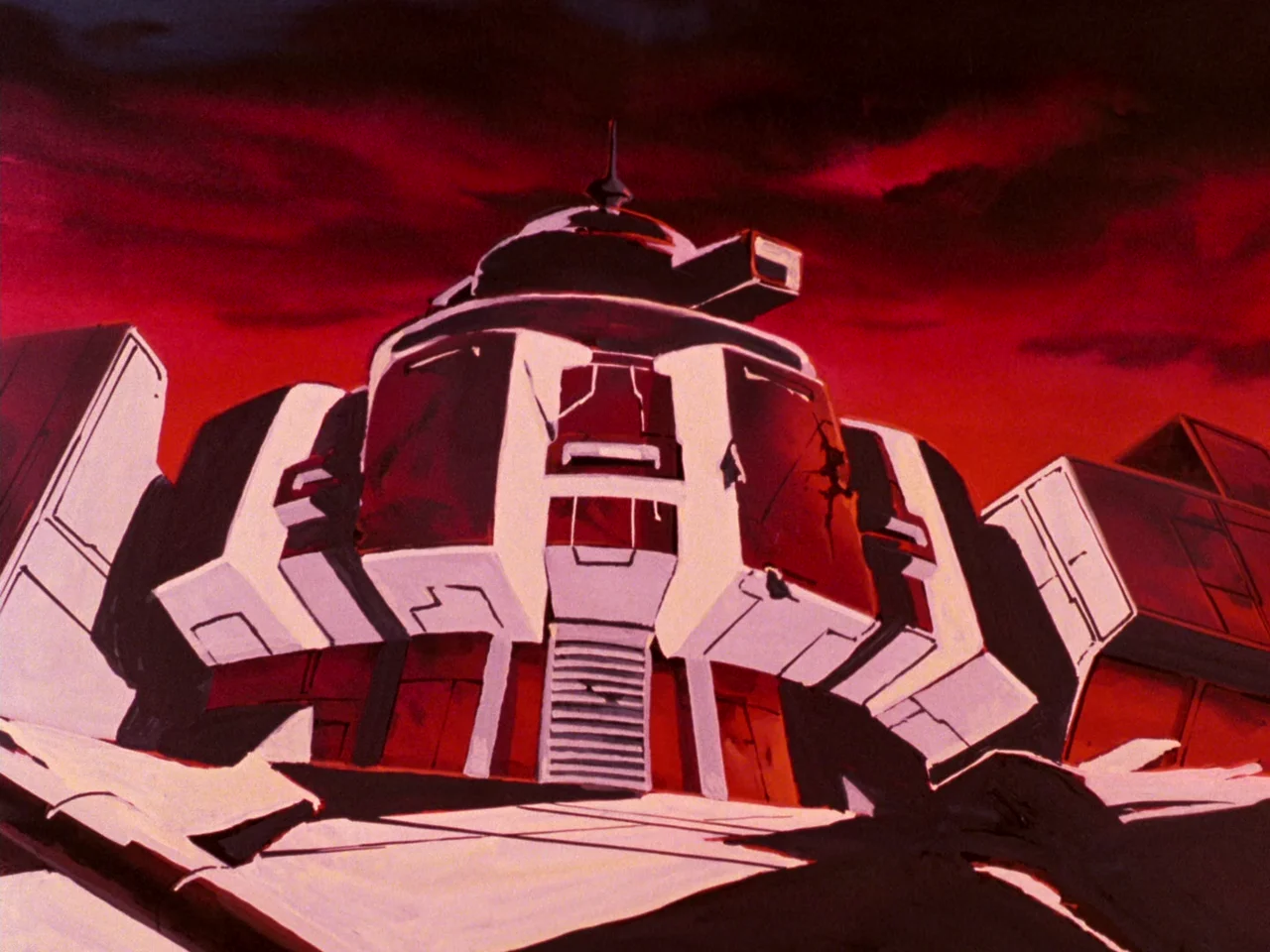
The Decepticons assault Autobot City in a pitched battle that kills much of the classic heroic roster, Ironhide, Ratchet, Prowl, Wheeljack and more, in quick, unsparing succession.
First act carnage
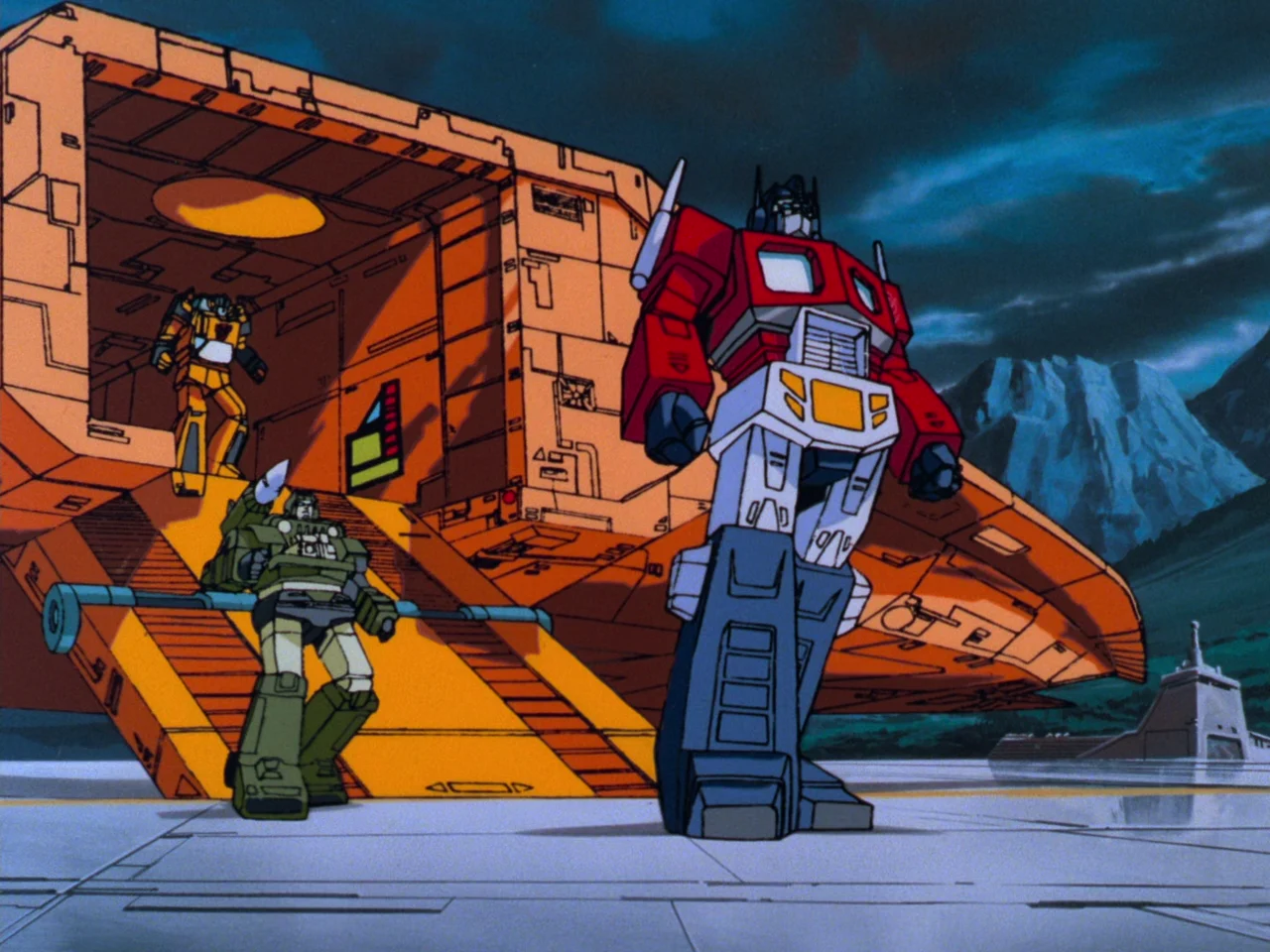
Autobot City is falling when a red and blue truck comes in off the road, transforms at speed and cuts through the Decepticon line without slowing. Nothing else in the film moves like this stretch does, and it ends with Prime and Megatron facing each other with nobody left to interrupt them.
The cavalry
Prime arrives, turns the battle, and duels Megatron. Both are mortally wounded. The dying Prime passes the Matrix of Leadership on with a promise that one day an Autobot will use it to light their darkest hour.
The defining beat
Out in space, Unicron salvages the broken Megatron and remakes him into Galvatron, then sends him to seize the Matrix, the one thing in the universe that can destroy a god.
The villain remade
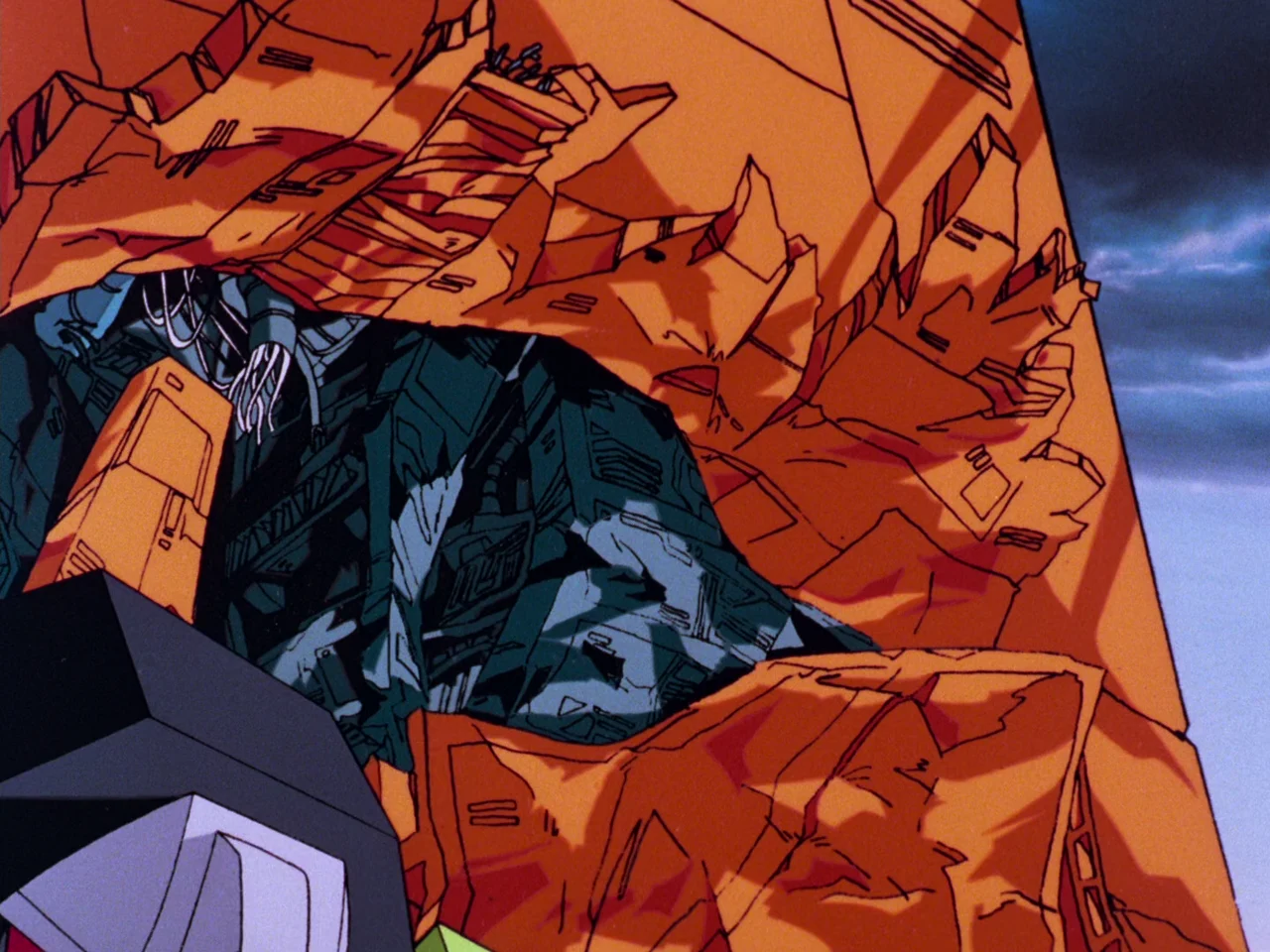
Galvatron runs down the shuttle carrying Ultra Magnus, Springer, Arcee and Daniel, and tears it open. Daniel is pulled through the breach in his exo-suit and left tumbling, and he comes back aboard in Arcee’s arms while the Autobots are still counting what the battle cost them.
The escape
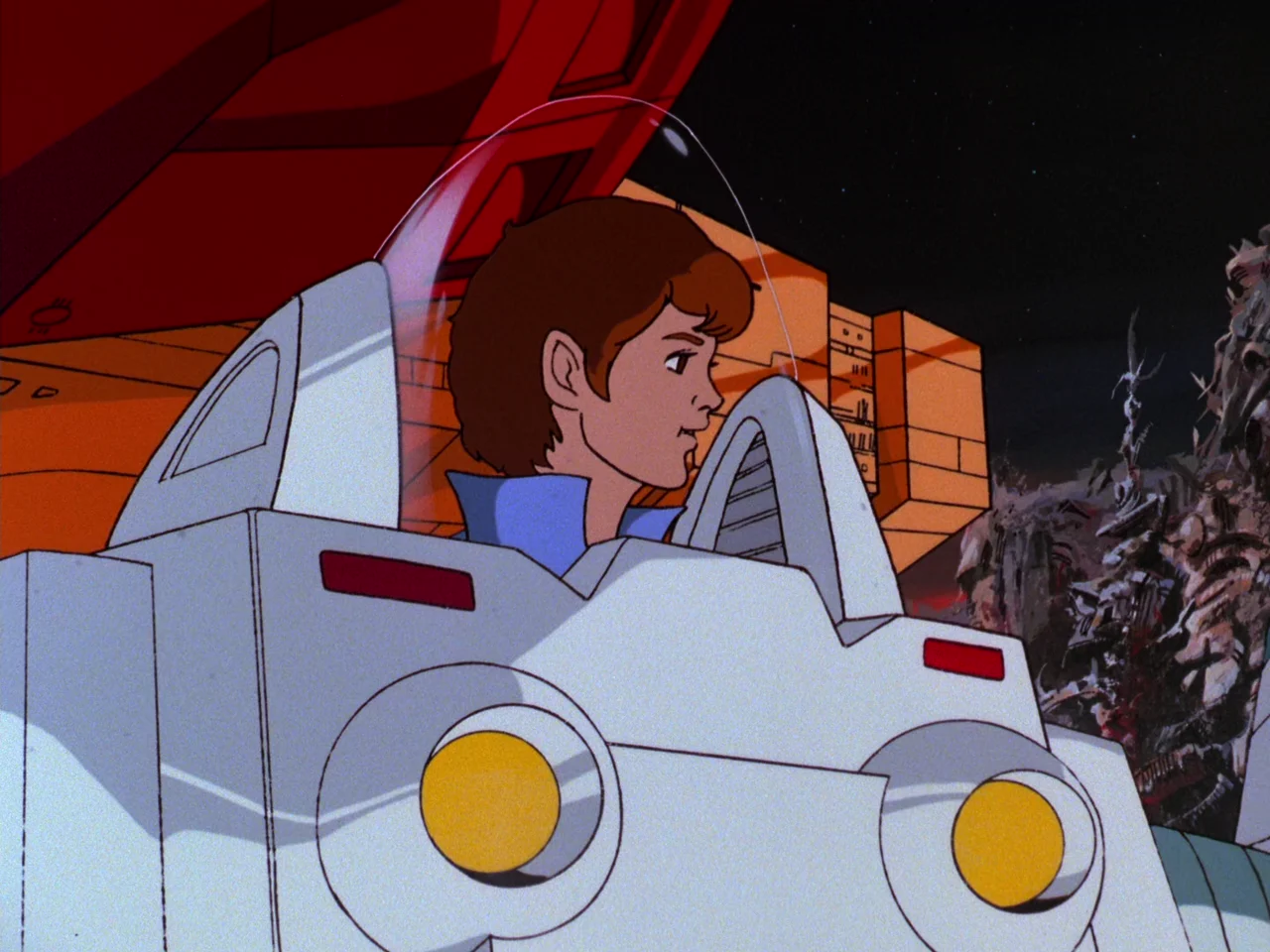
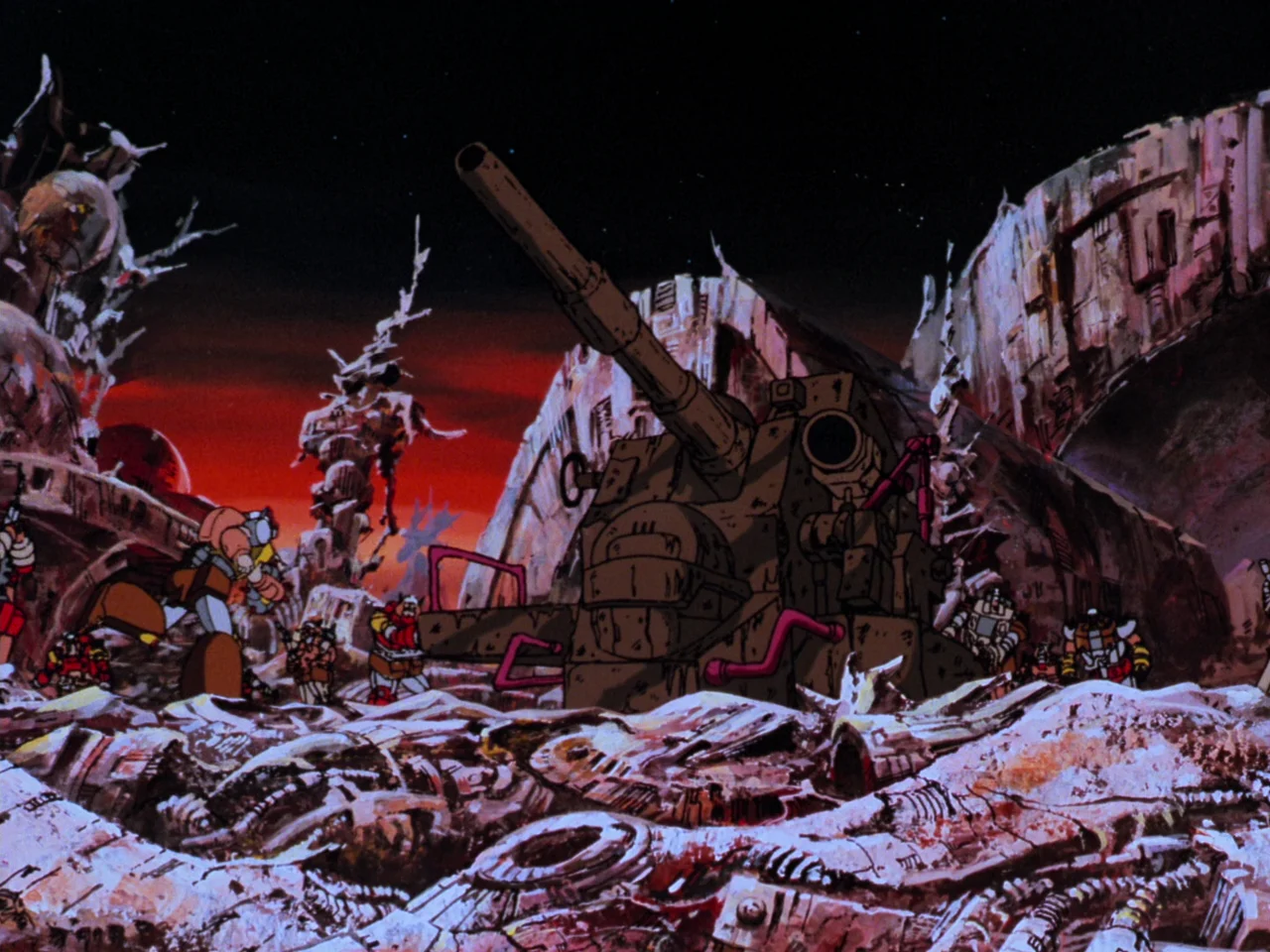
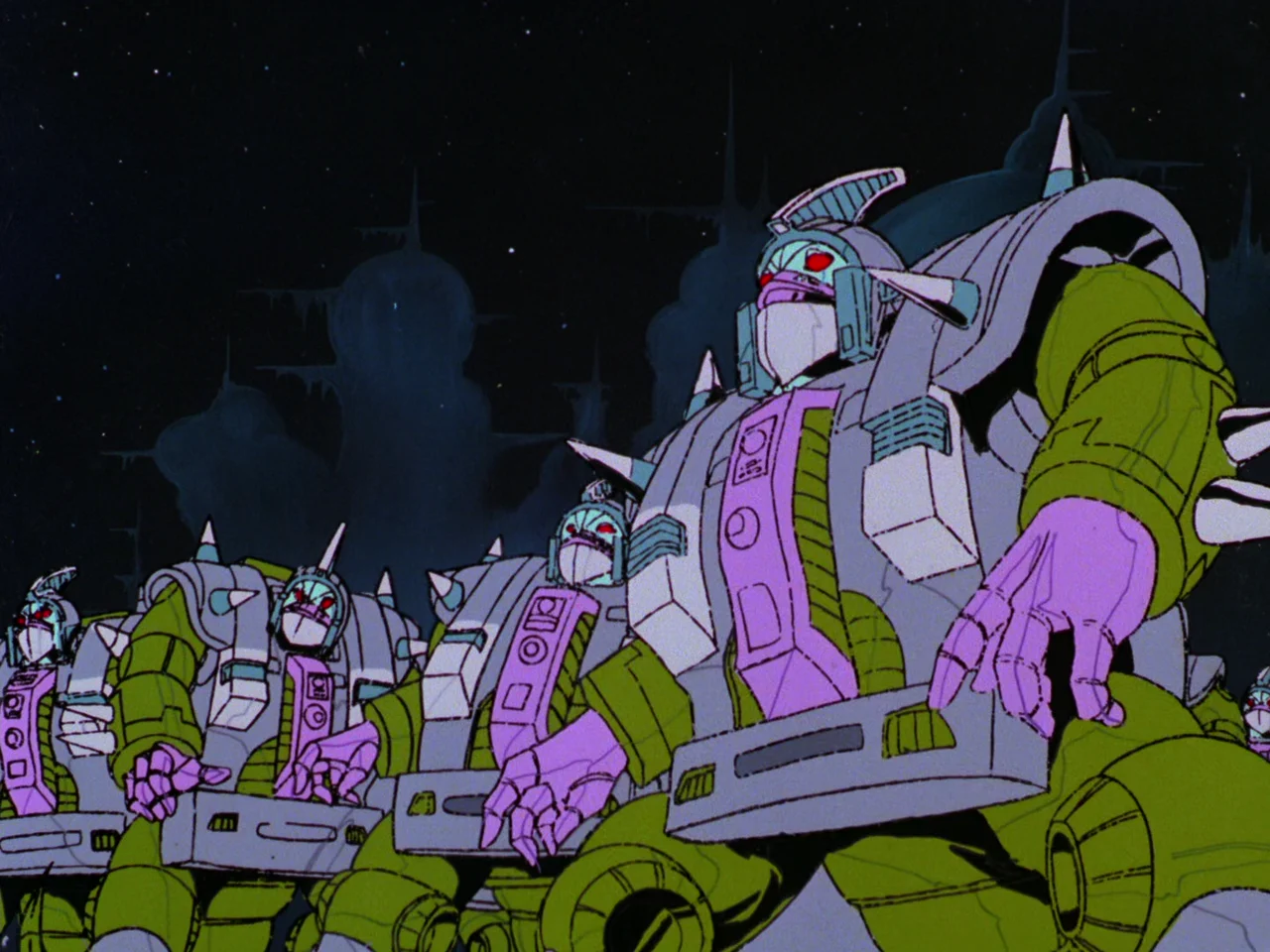
What is left of the Autobots is scattered in two broken shuttles. Ultra Magnus, Springer and Arcee come down in the rust and wreckage of the Planet of Junk, while Hot Rod and Kup fall into the reach of the Quintessons, whose five faced court has its verdict ready before the trial begins.
Second act
The planet Unicron reconfigures into a colossal humanoid and attacks Cybertron itself, one of the most ambitious cel-animated sequences the franchise ever attempted.
Third act
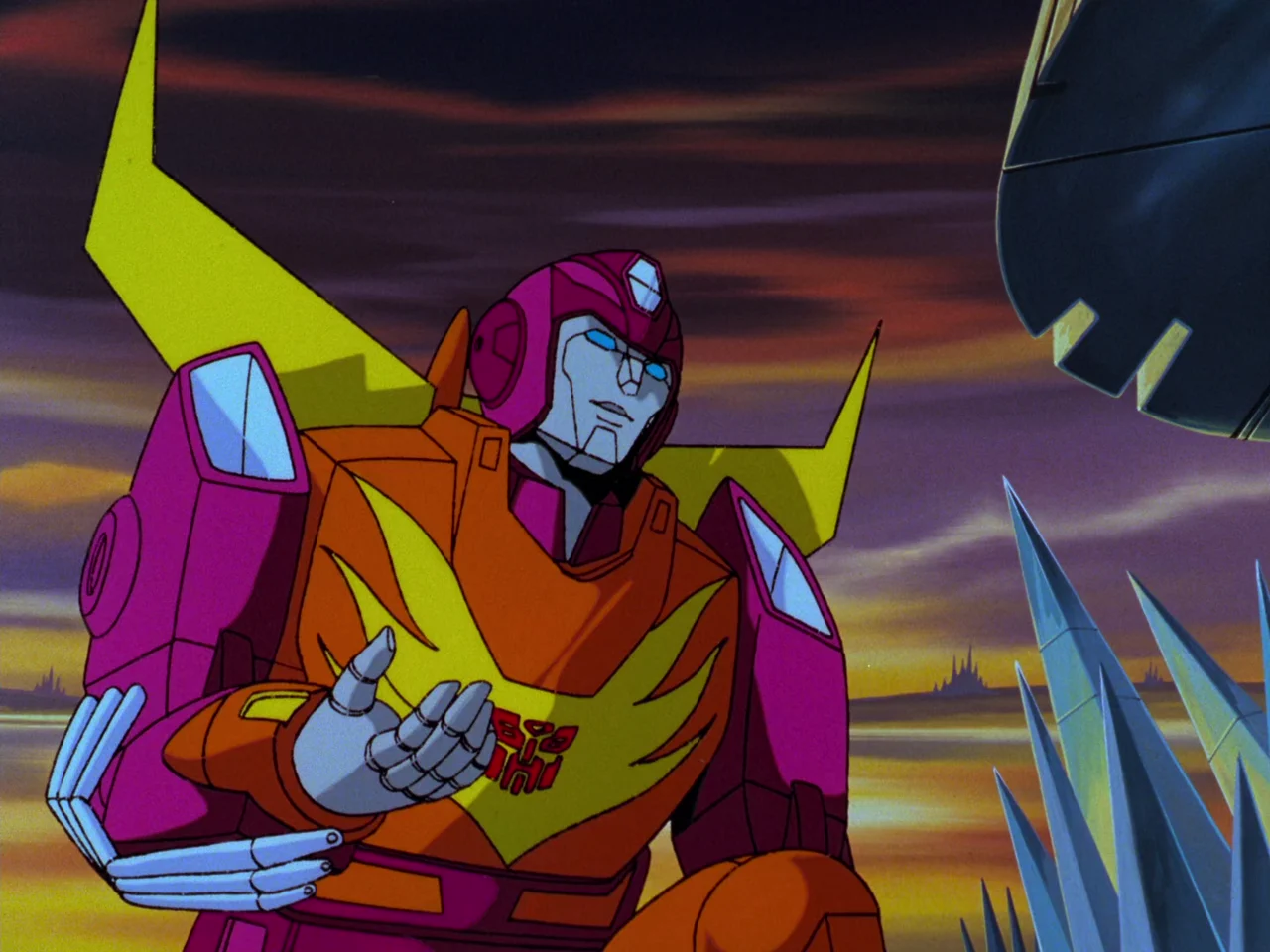
Inside Unicron, Hot Rod opens the Matrix and is transformed into Rodimus Prime, destroying the god from within and fulfilling the dying Prime’s prophecy. Till all are one.
Resolution
// THE ROAD TO THE MOVIE
From the cartoon’s launch to the film’s long second life on video, the strange arc of a movie built to sell toys that became a franchise touchstone. Scroll the timeline.
Produced by Sunbow and Marvel Productions and animated largely by Toei Animation in Japan, the film jumped from television budgets to a theatrical canvas. The deaths were a retail decision, clearing the 1984 and 1985 toys off the shelf for the 1986 line, but the backlash reshaped the franchise for years.
// CRAFT & VFX
Produced by Sunbow and Marvel Productions and animated largely by Toei Animation in Japan, with Korean studios contributing, under director Nelson Shin, who also supervised the television series. The jump from TV budgets to a theatrical canvas shows in every frame.
Freed from Saturday-morning constraints, the film delivers fluid robot transformations, layered space vistas and a vivid, hard-edged colour palette that the cartoon could never afford.
Unicron transforming from a planet into a colossal humanoid remains one of the most ambitious pieces of cel animation the franchise ever attempted, the technical showpiece of the whole production.
The widescreen format and the violence, with on-screen deaths and energy weapons blasting through robot bodies, gave the film a harder, more cinematic edge than anything on Saturday morning.
Directed by Nelson Shin, who also supervised the television series; written by Ron Friedman; produced by Sunbow and Marvel Productions; animated largely by Toei Animation in Japan with Korean studios contributing; score by Vince DiCola.
// THE SOUND OF 1994
The soundtrack is half the reason the film endures. Vince DiCola, hot off Rocky IV, delivered a driving synth score, and the song score leaned into mid-80s hair-metal and AOR. Stan Bush contributed The Touch and Dare, anthems that have long outlived the movie that introduced them, while ‘Weird Al’ Yankovic’s Dare to Be Stupid soundtracks the Junkions and Lion roars the reworked theme. Spectre General, better known as Kick Axe, and N.R.G. round out a cult record now pressed on vinyl.
Stan Bush, ‘The Touch’, the film’s anthem, via the official Stan Bush topic channel on YouTube.
// OFFICIAL TRAILER
Original 1986 theatrical trailer via YouTube. Embedded with youtube-nocookie for viewer privacy.
// THE LEGACY
Vince DiCola’s driving synth score and Stan Bush’s The Touch and Dare became cult artifacts in their own right. The Touch resurfaced in Boogie Nights and countless tributes, and the album is now pressed on vinyl for collectors.
The on-screen deaths, above all Optimus Prime’s, are still cited as one of the defining pop-culture gut-punches of the 1980s. The backlash even softened the same year’s G.I. Joe movie, where the lead’s death was rewritten into a coma.
A box-office failure in 1986, the film found its audience on home video and endless cable airings. The children it once traumatised grew into adults who treat it as a sacred text and the emotional touchstone of the franchise.
Unicron and the Matrix of Leadership became central franchise mythology, returning in later cartoons and lifted wholesale into Michael Bay’s live-action films and the 2023 Rise of the Beasts.
// EASTER EGGS & DEEP CUTS
Tap a card to flip it.
// COLLECT THE MOVIE
The Autobots and Decepticons of the 1986 movie, each linked to its full dossier and figures in our encyclopedia.
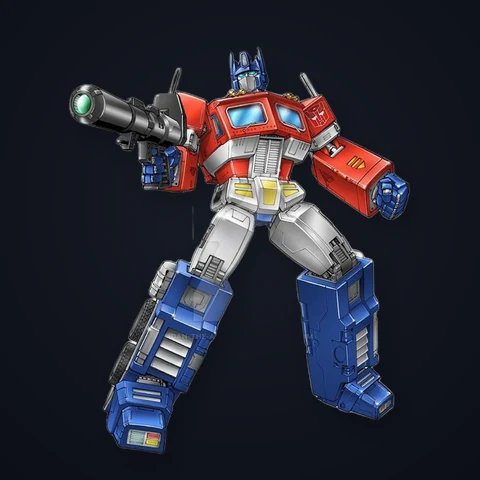 Optimus Prime The fallen Autobot leader whose death defines the film. Read his dossier and track the G1 figures in the archive. View dossier →
 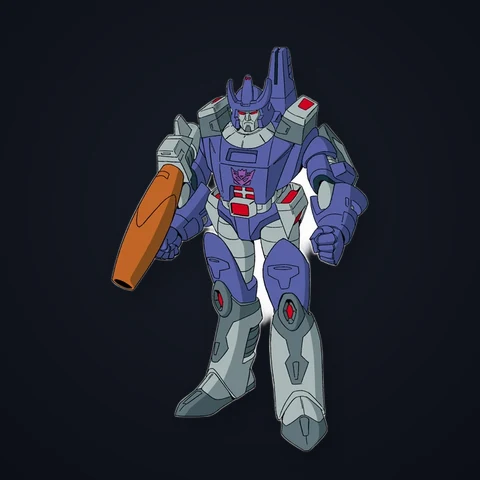 Galvatron Megatron reborn, voiced by Leonard Nimoy. Explore the reformatted Decepticon leader in the encyclopedia. View dossier →
 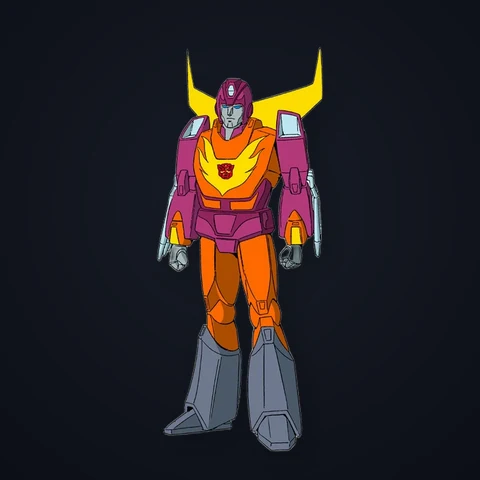 Hot Rod The young Autobot who becomes Rodimus Prime, voiced by Judd Nelson. Walk his rise in the archive. View dossier →
 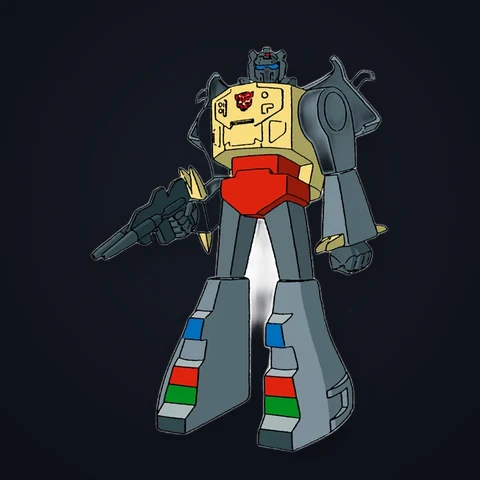 Grimlock The Dinobot leader at full swagger. See his dossier and figures. View dossier →
 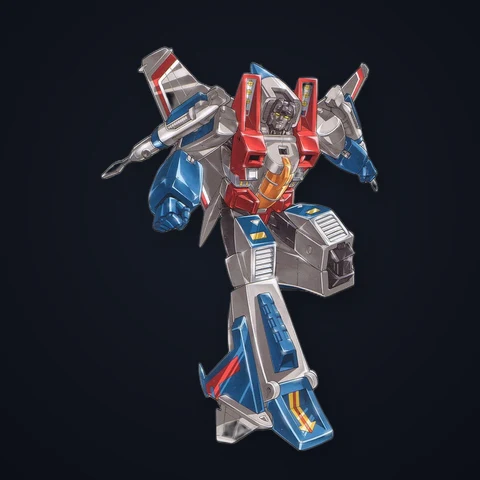 Starscream The treacherous air commander whose coronation ends fast. Browse his entry. View dossier →
 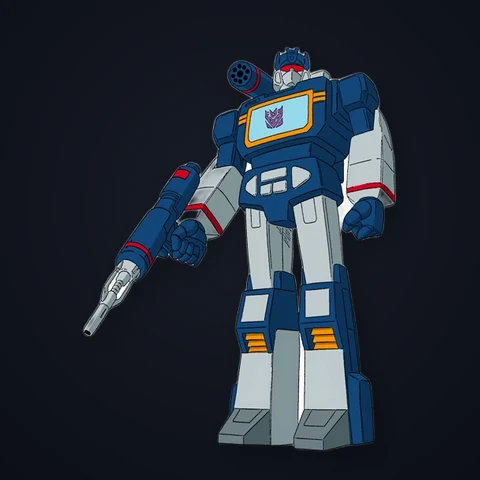 Soundwave Megatron’s monotone communications officer and G1 icon. Read his dossier. View dossier →
 // THE GALLERY
The full screencap set, grouped by act. Open a section, then click any frame to view it full screen.
// FREQUENTLY ASKED
Yes. For its 40th anniversary the 1986 film returns to cinemas from September 17, 2026, distributed by Fathom Entertainment, on a window the Fathom release page now renders as fifteen nights, to October 1. The run opens on Transformers Day, September 17, and screens in the United States, United Kingdom, Ireland, Canada, Australia, New Zealand, Mexico and Germany, with more markets to be announced.
Tickets go on sale August 7, 2026, online and at participating theatre box offices. Because it is a limited five-day run across a limited theatre footprint, the popular showtimes in each market are expected to sell first.
Yes. The original 1986 film has no post-credits sequence, but the 40th anniversary theatrical release adds an exclusive all-new chapter that plays after the credits, following the destruction of Unicron. It is the first new footage attached to the movie in forty years and premiered to a San Diego Comic-Con audience on July 24, 2026. Hasbro and Fathom have not said what happens in it.
The re-release is presented in 4K, with premium large format and 4DX screenings specified for the United States and United Kingdom. The film is rated PG. Participating U.S. theatres also carry limited collectible concessions, including popcorn buckets and specialty drinkware, while supplies last.
It is the original 1986 animated film, restored in 4K, not a new production. The only new element is the added post-credits chapter. The status of the next live-action Transformers movie and the Transformers x G.I. Joe crossover is tracked separately on our next Transformers movie hub.
The Transformers: The Movie is set in the year 2005, roughly two decades after the cartoon's then-present day. The Decepticons have conquered Cybertron and the Autobots fight on from its moons and a battered Earth.
Yes. In the film's first act Optimus Prime duels Megatron and both are mortally wounded. The dying Prime passes the Matrix of Leadership to the next generation. The backlash was so strong that he was later resurrected in the cartoon's third season.
It was a sales decision. Hasbro was retiring its first wave of toys to make shelf room for the 1986 line, so the cartoon cleared out the 1984 and 1985 characters on screen to introduce Hot Rod, Kup, Ultra Magnus and the rest.
Orson Welles voiced the planet-devouring Unicron in what became his final screen role. He died in October 1985, days after recording, and the film is dedicated to him.
Leonard Nimoy as Galvatron, Judd Nelson as Hot Rod, Eric Idle as Wreck-Gar and Robert Stack as Ultra Magnus, alongside returning regulars Peter Cullen as Optimus Prime and Frank Welker as Megatron, plus Lionel Stander, Casey Kasem and Scatman Crothers.
Vince DiCola composed the driving synth score. Stan Bush contributed the anthems The Touch and Dare, Weird Al Yankovic supplied Dare to Be Stupid, and Lion performed the reworked theme, with Spectre General (Kick Axe) and N.R.G. rounding out a cult soundtrack.
No. Released in August 1986 by De Laurentiis Entertainment Group, it grossed only around 5.8 million dollars in the United States against a budget in the same range. It was a box-office flop that only later became a cult classic on home video.
// WHERE TO WATCH
No subscription service carries the 1986 film, so watching it at home means renting it in HD for $2.99 or owning a copy. The cheapest disc is the 35th Anniversary Blu-ray at $11.89, in stock now; the 40th Anniversary DVD streets 13 October at $15.99; and the 4K steelbook, the first release with Dolby Vision and a Dolby Atmos mix, follows on 17 November.
Every route, every price and what each one actually gets you is laid out on our where to watch page.
Some links on this page are affiliate links that support transformers.tv. We may earn a commission on qualifying purchases at no extra cost to you. Prices checked 21 September 2026.
Pick your side
Hero80 Network